

Family Therapy vs Individual Therapy: Which Is Right for Your Situation?
Choosing the right type of therapy can feel confusing, especially when stress, conflict, worry, or emotional pain affects your daily life. Many people ask the same question when they start looking for help. Should I choose family therapy or individual therapy? The answer depends on your situation, your goals, and the people involved. Both options can help, but they work in different ways.
Family therapy vs individual therapy is not about one being better than the other. It is about which one fits your needs right now. Individual therapy gives you a private space to focus on your thoughts, feelings, habits, past pain, and personal goals. Family therapy brings loved ones into the process so everyone can work on communication, trust, conflict, and shared problems.
At Progress Health Network, we understand that every person and family has a different story. Some people need space to heal alone. Some families need help understanding each other. Some situations may need both types of support. This guide will help you understand the difference, the benefits, and the signs that show which option may be right for you.
What Is Individual Therapy?
Individual therapy is a one on one meeting between you and a trained therapist. In this setting, you can speak openly about your life, stress, emotions, fears, choices, and goals. You do not need to worry about other people in the room. The session focuses on you.
Many people choose individual therapy when they feel anxious, sad, overwhelmed, stuck, angry, or unsure about life. Others use it to heal from trauma, grief, low self worth, relationship pain, work stress, or major life change. You can also use therapy when you want to understand yourself better and build healthier habits.
Individual therapy gives you time to slow down and look at what is happening inside you. A therapist can help you notice patterns in your thoughts and actions. You may learn how past events affect your present life. You may also learn simple tools to manage stress, set limits, and make better choices.
This type of care works well when the main concern starts inside your own emotional world. For example, you may struggle with panic, low mood, guilt, shame, or fear. You may also want support because you feel lost in your identity or life direction. In these cases, individual counseling can help you build insight and strength in a private space.
What Is Family Therapy?
Family therapy brings two or more family members into the healing process. The goal is not to blame one person. The goal is to help the family understand each other and change patterns that create stress. A family can include parents, children, siblings, partners, grandparents, caregivers, or other close loved ones.
Family therapy can help when problems affect more than one person in the home. These problems may include constant arguments, poor communication, parenting stress, blended family issues, grief, divorce, behavior problems, substance use, or conflict between parents and children. When one person struggles, the whole family may feel the impact.
In family therapy, the therapist listens to each person. The therapist helps the family speak in a safer and calmer way. Family members may learn how to express needs without attacking each other. They may also learn how to listen without shutting down or becoming defensive.
Family counseling can be very helpful when family members feel stuck in the same fights. For example, one person may feel unheard, another may feel blamed, and another may avoid talking at all. Over time, these patterns can hurt trust. Therapy helps the family notice these patterns and practice better ways to respond.
Difference Between Family Therapy and Individual Therapy
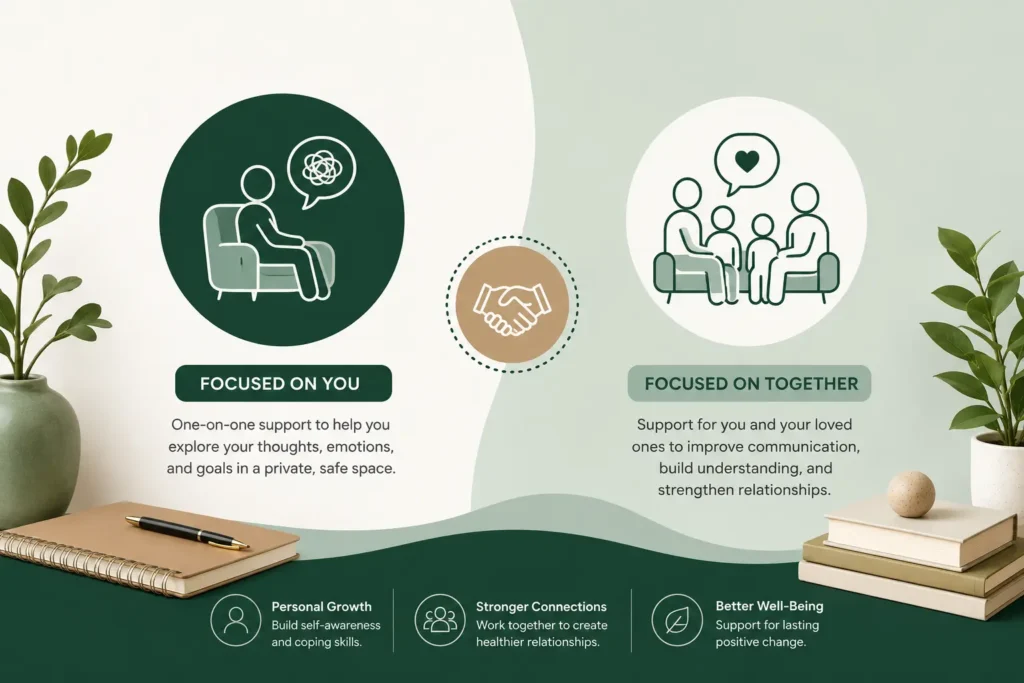
The main difference is the focus. Individual therapy focuses on one person. Family therapy focuses on the relationship system around the person. Both types of therapy care about emotional health, but they look at the problem from different angles.
In individual therapy, the therapist asks questions about your personal thoughts, feelings, history, choices, and goals. You may work on self awareness, coping skills, emotional control, healing from pain, and making changes in your own life.
In family therapy, the therapist looks at how family members affect each other. The focus includes communication, roles, rules, conflict, trust, and shared stress. The therapist helps the family work as a team instead of staying trapped in blame.
Think of it this way. If you feel depressed and want help understanding your own thoughts, individual therapy may be a good starting point. If family arguments make your depression worse, or if your family does not know how to support you, family therapy may also help.
Neither option replaces the other in every case. Sometimes one is enough. Sometimes both work together. A therapist can help you decide what makes sense for your current needs.
When Individual Therapy May Be Right for You
Individual therapy may be right when your main goal is personal healing. You may want a safe place where you can speak freely without worrying about how family members will react. This private space can help you explore feelings that you may not feel ready to share with others.
You may choose individual therapy if you feel anxious most days, struggle with sadness, have trouble sleeping, feel low confidence, or feel stuck in negative thoughts. It can also help if you have gone through trauma, loss, abuse, or a painful life change. A therapist can help you process these experiences at your own pace.
Individual therapy also helps when you want to change your own habits. You may want to stop people pleasing, reduce anger, improve self control, set healthy limits, or make better choices in relationships. The therapist helps you understand what drives your actions and what steps can help you grow.
This type of therapy can also support people who feel alone, even if they have family around them. You may feel that no one understands you. You may feel tired from hiding your pain. Therapy gives you a place where you can be honest and receive steady support.
When Family Therapy May Be Right for You
Family therapy may be right when the problem affects the whole family or when family patterns make the problem harder. Sometimes one person carries the symptom, but the whole family feels the stress. A child may act out, a parent may feel overwhelmed, or a couple may argue often. Therapy can help everyone understand their part in the pattern.
You may choose family therapy if your home feels tense, if small talks turn into big fights, or if family members avoid each other. It can also help when trust has been damaged and people do not know how to repair it. The therapist creates a space where everyone can speak with more care and less fear.
Family therapy also helps during life changes. These changes may include divorce, remarriage, moving, illness, loss, financial stress, or a new child in the home. During these times, family members may react in different ways. Therapy helps the family adjust together.
Therapy for families can also help when a loved one has a mental health concern. Family members may want to help but may not know what to say or do. A therapist can teach the family how to give support without control, criticism, or pressure.
Can You Do Both Family and Individual Therapy?
Yes, many people benefit from both. You may need individual therapy for private healing and family therapy for relationship repair. These two types of care can support each other when used in the right way.
For example, a teen may need individual therapy for anxiety while the family also attends sessions to improve communication at home. A parent may need personal therapy for stress while the family works together on conflict and routines. A couple may attend family sessions while one partner also receives individual support for trauma.
Doing both does not mean your situation is worse. It often means you want complete support. Personal healing and family change can happen at the same time. When each person grows and the family system improves, progress can feel stronger and more lasting.
It is important to talk with a therapist about how to manage both forms of therapy. Clear goals help everyone stay on track. Privacy also matters. What you share in individual therapy should stay safe unless you choose to bring it into family work.
Which Therapy Works Best for Anxiety or Depression?
Anxiety and depression can affect one person, but they can also affect the whole home. Individual therapy often works well as a first step because it gives the person direct support. The therapist can help the person understand triggers, thoughts, body signs, and coping tools.
Family therapy may help when family stress adds to anxiety or depression. For example, a person may feel worse when family members argue, criticize, ignore, or misunderstand the problem. In this case, family sessions can teach loved ones how to respond with care.
Sometimes family members do not mean to hurt the person, but they may say things that increase shame. They may say, “Just stop worrying,” or “You have nothing to be sad about.” These words can make the person feel more alone. Family therapy can help loved ones learn better ways to support healing.
If anxiety or depression creates safety concerns, such as thoughts of self harm, it is important to seek urgent support. Therapy is helpful, but crisis care may be needed when safety is at risk.
Which Therapy Works Best for Relationship Conflict?
Family therapy often works best when the main issue is conflict between people. If family members keep having the same fight, the therapist can help them see the pattern. Many families do not fight only about the topic in front of them. They fight because they feel unheard, hurt, blamed, or unsafe.
For example, a parent and adult child may argue about respect. A couple may argue about money. Siblings may fight over care for an aging parent. These conflicts can carry deeper feelings. Family therapy helps people slow down and speak about the real need behind the argument.
Individual therapy can still help in relationship conflict. If you feel angry, fearful, or unable to speak clearly, individual therapy can help you learn emotional control and better communication. It can also help you decide what limits you need.
In many cases, relationship conflict improves when both personal growth and family change happen together. The best choice depends on who is willing to attend therapy and what goal matters most.
Which Therapy Works Best for Children and Teens?
Children and teens often benefit from family therapy because their lives connect closely with home, school, and caregivers. When a young person struggles, the family can play a strong role in support. Parents may need help understanding what the child feels and how to respond.
A child may not always have the words to explain pain. They may show stress through anger, silence, crying, poor grades, sleep problems, or behavior changes. Family therapy helps caregivers look beyond the behavior and understand the need behind it.
Individual therapy may also help children and teens. A young person may need a private place to talk about bullying, fear, sadness, identity, peer stress, or family pressure. The therapist can help the child build coping skills and confidence.
Parents often ask which one to start with. The answer depends on the situation. If the child’s struggle is linked to family conflict, family therapy may be the best start. If the child needs private emotional support, individual therapy may be better. Many families use both.
What Happens in the First Therapy Session?
The first session usually focuses on understanding your needs. In individual therapy, the therapist may ask about your concerns, history, current stress, support system, and goals. You do not have to share everything at once. A good therapist helps you feel safe and moves at a pace that works for you.
In family therapy, the therapist may ask each person why they came and what they hope will change. The therapist may set simple rules for respectful talking. Everyone may get a chance to speak. The therapist will look for patterns in how the family talks, reacts, and solves problems.
The first session is also a time to ask questions. You can ask how therapy works, how long it may take, what goals you will work on, and what role each person will have. Therapy works best when people understand the process.
You do not need to arrive with perfect words. You can simply explain what feels hard. The therapist can help shape the conversation from there.
How to Choose the Right Option for Your Situation
Start by asking where the main pain shows up. If the pain is mostly inside you, individual therapy may be the right first step. If the pain shows up in family conflict, poor communication, or shared stress, family therapy may be the better choice.
Next, ask who needs to be part of the change. If your goal is to manage your own anxiety, grief, anger, or self doubt, you may need personal support. If your goal is to improve the way people at home treat each other, you may need family sessions.
Also think about safety. If you do not feel safe speaking openly with family members, individual therapy may be the better first step. A therapist can help you plan how and when to include others, if that becomes helpful later.
Willingness matters too. Family therapy works best when key family members agree to take part. If others refuse, you can still begin individual therapy. Your own growth can change how you respond, even if others do not attend.
What If My Family Does Not Want Therapy?
It can feel discouraging when you want help but your family does not. You may feel like nothing can change unless everyone joins. The truth is, you can still start with individual therapy. Your own healing matters.
A therapist can help you manage stress, set limits, and speak more clearly. You can learn how to stop repeating old patterns. You can also learn how to invite family members into therapy without pressure or blame.
Instead of saying, “You all need therapy,” you might say, “I want us to understand each other better, and I think a therapist could help us talk in a calmer way.” This kind of invitation may feel less threatening.
Still, you cannot force people to change. Therapy can help you accept what you can control and what you cannot. That can bring relief and clarity.
How Long Does Therapy Take?
The length of therapy depends on your goals, the concern, and how often you attend. Some people feel progress after a few sessions. Others need longer support, especially when the pain is deep or has lasted for years.
Individual therapy may take time because personal patterns often build slowly. You may need space to build trust, understand yourself, and practice new skills. Family therapy may also take time because several people must learn new ways to talk and respond.
Progress does not always mean every problem disappears. Progress may look like fewer fights, faster repair after conflict, better coping, more honest talks, or stronger limits. Small changes can make daily life feel much better.
Your therapist can review goals with you over time. This helps you see what is working and what may need to change.
Signs That Therapy Is Helping
Therapy may be helping if you feel more aware of your emotions and choices. You may notice that you pause before reacting. You may speak more clearly. You may feel less alone. You may also start making choices that support your health.
In family therapy, progress may show up as calmer talks, better listening, fewer blame cycles, and more respect. Family members may begin to understand each other’s feelings instead of only defending their own side.
Change can feel slow at first. Some sessions may feel hard because honest talks can bring up pain. That does not mean therapy is failing. It may mean important issues are finally being addressed.
A good therapist will help you stay focused, safe, and supported through the process.
Common Myths About Family Therapy and Individual Therapy
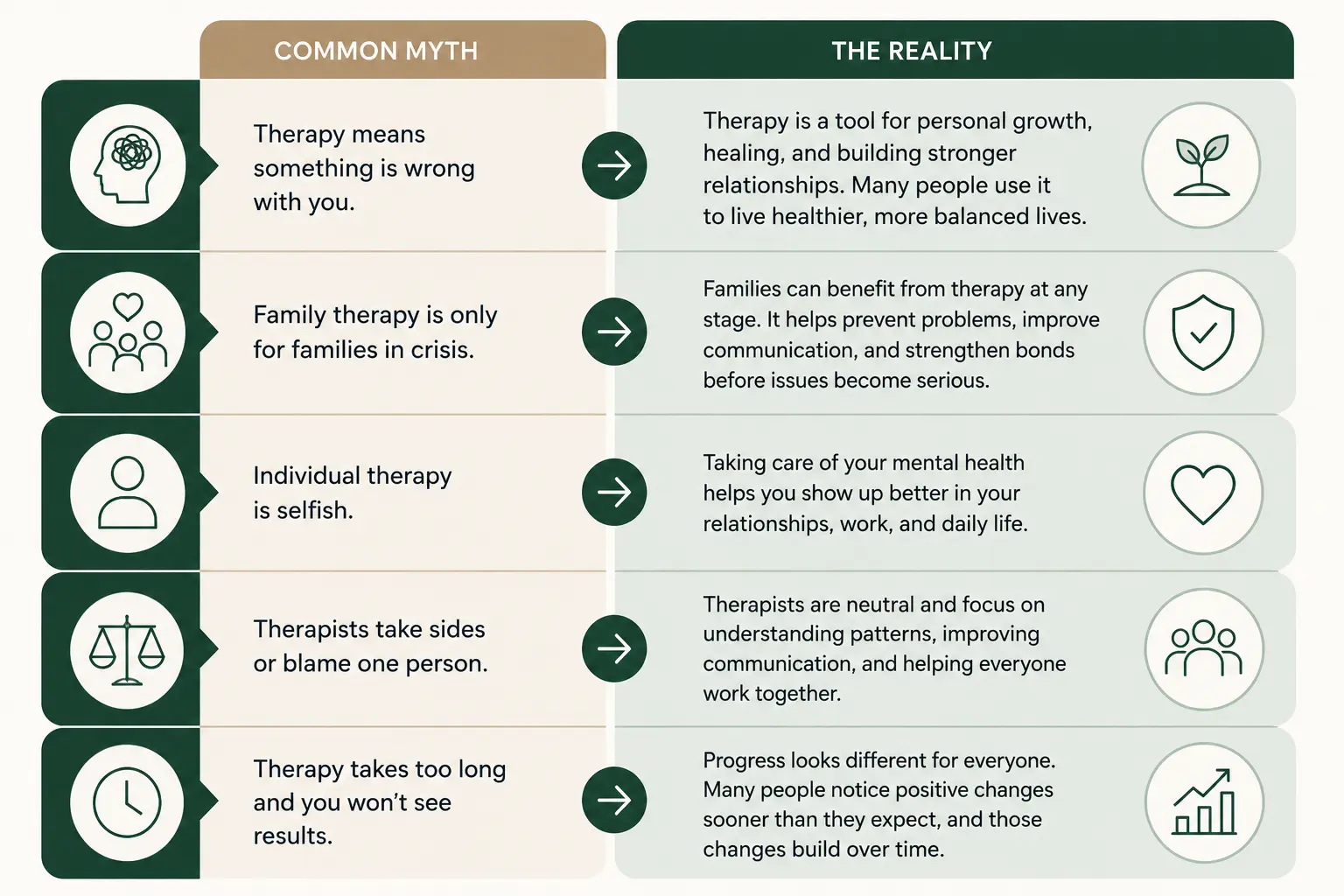
Some people think therapy means something is wrong with them. This is not true. Therapy is a support tool. People use it to heal, grow, communicate better, and handle life with more strength.
Some people think family therapy is only for families in crisis. This is also not true. Families can use therapy before problems become severe. They can learn better ways to handle stress, change, and conflict.
Some people think individual therapy is selfish. In reality, personal healing often helps relationships. When you understand yourself better, you may communicate with more care and make healthier choices.
Some people think the therapist will take sides. A trained therapist does not work to shame one person. The goal is to understand the pattern and help people move toward healthier behavior.
How Progress Health Network Can Help
Progress Health Network supports people and families who want better mental and emotional health. Whether you need private support or help with family conflict, therapy can give you a clear place to start.
You do not have to wait until life feels out of control. You can seek help when stress starts to affect your sleep, mood, work, school, parenting, or relationships. Early support can prevent problems from growing.
If you feel unsure, that is normal. Many people feel nervous before starting therapy. You may wonder what to say or whether it will work. A caring therapist will guide you through the process and help you choose the right path.
Family therapy vs individual therapy is a personal choice. The best option is the one that fits your goals, your safety, and your support needs. You can start with one and add the other later if needed.
Choosing the Right Therapy Support
Family therapy and individual therapy both offer real support, but they serve different needs. Individual therapy helps you focus on your own healing, thoughts, emotions, and goals. Family therapy helps loved ones improve communication, repair trust, and face shared problems together.
If your main concern is personal pain, individual therapy may be the right first step. If your main concern involves family conflict or home stress, family therapy may be a better fit. If both personal and family issues matter, using both may give you the strongest support.
You do not need to make the perfect choice before you begin. A therapist can help you understand your needs and build a plan that fits your life. The most important step is to reach out for help when you know something needs to change.
FAQs
What is the main difference between family therapy and individual therapy?
The main difference is the focus. Individual therapy focuses on one person’s thoughts, feelings, and goals. Family therapy focuses on how family members relate, talk, and respond to each other. Both can help, but they work in different ways.
Is family therapy better than individual therapy?
Family therapy is not always better, and individual therapy is not always better. The right choice depends on your situation. If the problem affects the family system, family therapy may help more. If the problem is mainly personal, individual therapy may be the best start.
Can I start therapy alone if my family will not join?
Yes, you can start therapy alone. Individual therapy can help you manage stress, set limits, improve communication, and make healthier choices. Your growth can still make a difference, even if other family members do not attend.
Can family therapy help with anxiety or depression?
Family therapy can help when anxiety or depression affects family life or when family stress makes symptoms worse. It can teach loved ones how to give better support. Individual therapy may also be needed for direct personal care.
Do children need family therapy or individual therapy?
Children may need either one or both. Family therapy can help when home stress, parenting issues, or conflict affects the child. Individual therapy can help when the child needs private support for feelings, fears, or personal struggles.
How do I know which therapy to choose?
Ask yourself where the problem shows up most. If it mostly affects your inner life, individual therapy may be best. If it affects family relationships, family therapy may be best. A therapist can also help you decide after learning more about your situation.
Can I do family therapy and individual therapy at the same time?
Yes, many people do both. Individual therapy can support personal healing, while family therapy can improve relationships at home. Clear goals and privacy rules help both types of therapy work well together.
Is therapy only for serious problems?
No, therapy can help before problems become severe. Many people use therapy to improve communication, handle stress, build confidence, and make life feel more stable. You do not need to wait for a crisis to get support.